Best Driveway Options for Sloped Properties
Discover the best driveway materials for sloped properties, which options to avoid, and key installation tips to ensure durability and safety.
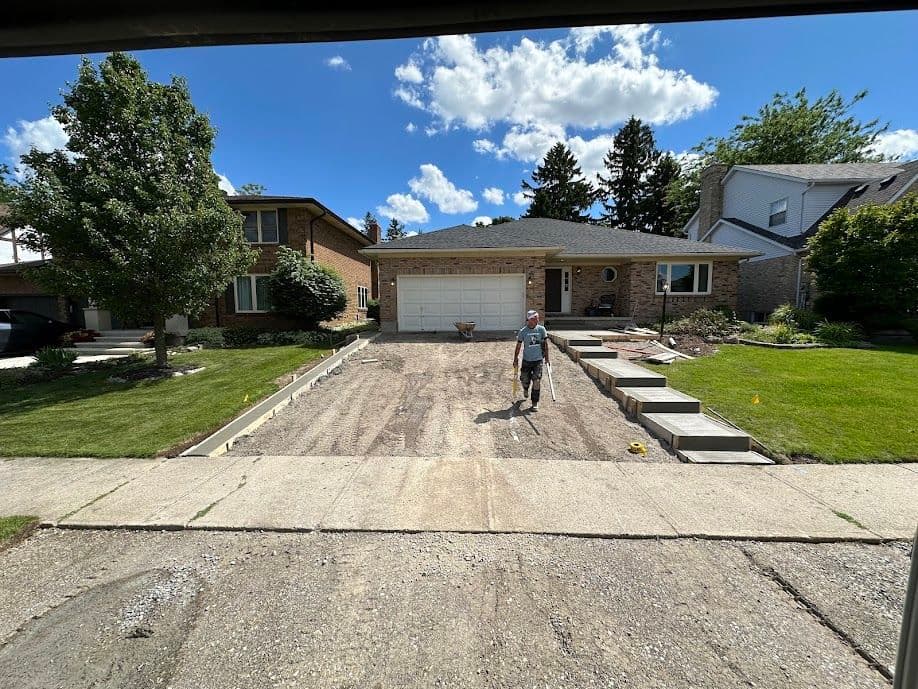
Installing a driveway on a sloped property is very different from installing one on flat ground.
Slope affects:
Drainage
Traction in winter
Long-term durability
Base stability
Choosing the wrong material on an incline can lead to cracking, slipping, pooling water, or even structural failure.
In this guide, we’ll break down:
The best driveway materials for sloped properties
Which options to avoid
Key installation considerations
Realistic cost expectations in Southern Ontario
So you can make the right decision for your property.
Why Sloped Driveways Require Special Consideration
On flat ground, most driveway materials perform well if installed correctly.
On a slope, however, you’re dealing with:
Gravity pulling water downhill
Increased surface runoff
Higher risk of erosion
Reduced traction in icy conditions
The steeper the slope, the more important material selection and base preparation become.
1. Exposed Aggregate Concrete (Best for Traction + Durability)
Exposed aggregate is one of the best-performing options for sloped driveways.
Why It Works Well on Slopes
The textured surface provides:
Better grip than smooth finishes
Improved winter traction
Reduced slipping when wet
Because the stones are embedded into the surface, it maintains strength while offering natural texture.
Pros for Sloped Properties
Excellent traction
Long lifespan (25–30 years)
Lower maintenance than interlock
Strong resistance to runoff erosion
Considerations
Higher upfront cost than plain concrete
Rougher texture for shoveling
2. Broom-Finished Concrete (Budget-Friendly and Practical)
Standard broom-finished concrete can work well on mild to moderate slopes.
The broom texture adds subtle traction while keeping the surface relatively smooth.
Pros
Most affordable concrete option
Durable and long-lasting
Low maintenance
Works well when proper drainage is installed
Cons
Less grip than exposed aggregate
Can become slippery if sealed incorrectly
Not ideal for very steep slopes
For moderate inclines, broom-finished concrete is often the most cost-effective solution.
3. Interlock Pavers (Good for Drainage, Higher Maintenance)
Interlock can perform well on slopes when installed properly.
Because pavers are individual units:
They allow slight movement without cracking
Drainage can be better managed
Sections can be repaired individually
Pros
Flexible under minor ground movement
Easy spot repairs
Decorative and customizable
Cons
Higher maintenance (weeds, joint sand)
Can shift if base isn’t properly compacted
Higher overall cost
On steep slopes, proper base compaction and edge restraints are critical.
4. Stamped Concrete (Use With Caution on Slopes)
Stamped concrete looks impressive, but it’s not always ideal for sloped properties.
Because the surface is smoother than exposed aggregate:
It can become slippery when wet or icy
Winter traction may be reduced
Non-slip additives can help, but traction still won’t match textured finishes.
Stamped concrete works better on:
Mild slopes
Driveways with good sun exposure
Areas where winter icing isn’t severe
Options to Avoid on Steep Slopes
Some driveway materials struggle significantly on inclines.
Gravel
Washes downhill over time
Requires constant maintenance
Poor winter performance
Smooth Finished Concrete
Very slippery when wet or icy
Unsafe on steep grades
These options often create long-term headaches on sloped properties.
Drainage: The Most Important Factor
No matter which material you choose, proper drainage is essential.
A sloped driveway should include:
Correct grading away from the home
Strategic control joints
Adequate base thickness (typically 6–8 inches compacted base)
Possibly trench drains or swales
Poor drainage is one of the leading causes of driveway failure on slopes.
Installation Timeline
Installing a driveway on a slope may take slightly longer due to grading precision.
Typical timeline:
Removal & grading adjustments: 1–2 days
Base installation & compaction: 1–2 days
Forming & reinforcement: 1 day
Concrete or paver installation: 1 day
Cure time before vehicle access: 5–7 days (concrete)
Extra care during base preparation makes all the difference.
Overall Price Estimates (Southern Ontario)
Costs vary depending on slope severity, access, and drainage requirements.
Typical ranges:
Broom-finished concrete: $10,000 – $15,000
Exposed aggregate: $18,000 – $25,000+
Stamped concrete: $20,000 – $30,000+
Interlock: $22,000 – $35,000+
Steeper slopes may increase costs due to:
Additional base material
Drainage solutions
More labour-intensive forming
What’s the Best Choice?
For most sloped properties:
Best overall: Exposed aggregate
Best budget option: Broom-finished concrete
Best decorative flexibility: Interlock
Use cautiously: Stamped concrete
The right choice ultimately depends on:
Slope severity
Budget
Desired appearance
Long-term maintenance tolerance
Final Thoughts
Sloped driveways demand more planning, better drainage, and proper base preparation.
Choosing the right material isn’t just about appearance — it’s about safety, longevity, and performance through Ontario winters.
A properly installed driveway on a slope can last decades. A poorly planned one can develop problems within just a few seasons.
If you’re considering replacing or installing a driveway on a sloped property, a professional assessment can help ensure the material and grading are done right the first time.