Exposed Aggregate Driveways: Pros, Cons & Costs
Explore the benefits and drawbacks of exposed aggregate driveways. Learn about costs and decide if this decorative finish is right for your home.
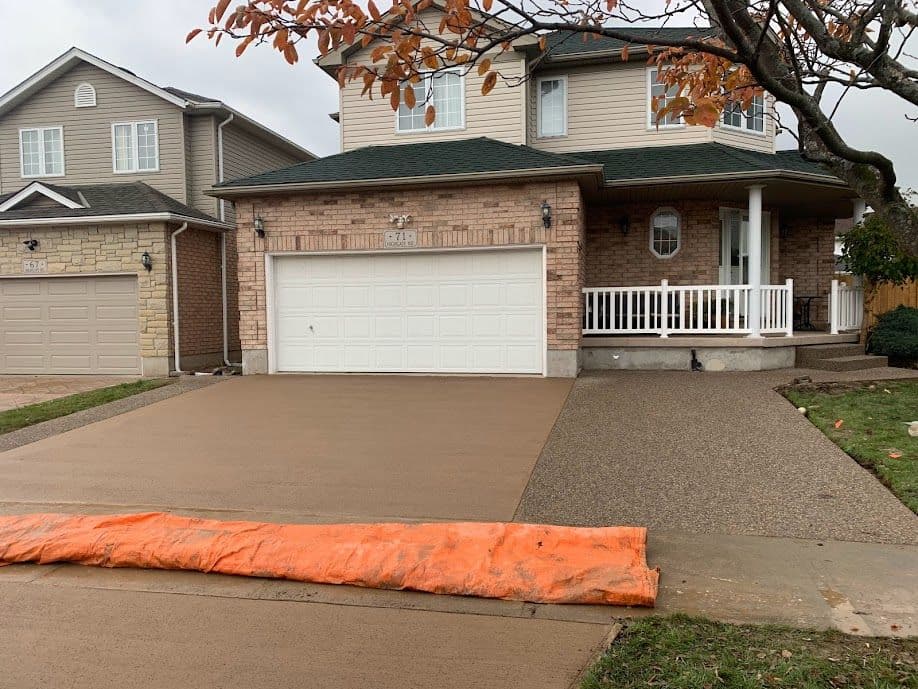
If you’re looking for a driveway that stands out from standard concrete without going full interlock, exposed aggregate concrete is one of the most popular premium options available.
Homeowners often choose exposed aggregate for its decorative appearance, durability, and slip resistance — but it’s not the right choice for every property or budget.
In this guide, we’ll break down:
What exposed aggregate actually is
The real pros and cons
How it compares to standard concrete
What you can expect to pay
So you can decide if it’s the right fit for your home.
What Is an Exposed Aggregate Driveway?
Exposed aggregate is a decorative concrete finish created by removing the top layer of cement paste after the concrete is poured, revealing the natural stone underneath.
These stones can include:
Pea gravel
Crushed stone
River rock
Coloured or specialty aggregates
Once exposed, the surface is washed and sealed, leaving a textured, visually appealing finish that’s far more decorative than broom-finished concrete.
Pros of Exposed Aggregate Driveways
1. High-End Appearance
Exposed aggregate instantly upgrades curb appeal. The natural stone texture adds depth and character that plain concrete simply can’t match.
It pairs especially well with:
Stone or brick homes
Modern or craftsman-style architecture
Landscaped front yards
No two exposed aggregate driveways look exactly the same.
2. Excellent Durability
When installed correctly, exposed aggregate concrete can last 25–30 years or more, similar to standard concrete.
The embedded stones help:
Reduce surface wear
Improve resistance to scaling
Hold up well under vehicle traffic
This makes it a solid long-term investment.
3. Slip Resistance
The textured surface provides better traction than smooth concrete, especially when wet.
This is a big advantage for:
Sloped driveways
Walkways and stairs
Homes with frequent foot traffic
In winter conditions, exposed aggregate generally offers better grip than smooth finishes.
4. Low Maintenance Compared to Interlock
Unlike interlock pavers, exposed aggregate:
Has no joints to weed
Won’t shift or settle individually
Doesn’t require re-leveling
Routine maintenance typically involves:
Occasional washing
Resealing every 3–5 years
Cons of Exposed Aggregate Driveways
1. Higher Upfront Cost
Exposed aggregate costs more than standard broom-finished concrete due to:
Specialized finishing techniques
Higher labour requirements
Decorative materials
For homeowners on a tight budget, this can be a deciding factor.
2. Surface Can Be Rougher
While great for traction, exposed aggregate is not as smooth as regular concrete.
This may be a drawback for:
Basketball play
Snow shoveling (stones can catch the blade)
Barefoot walking
The size and type of aggregate used can help control how aggressive the texture feels.
3. Repairs Are More Noticeable
If exposed aggregate cracks or needs patching, repairs can be harder to blend seamlessly compared to plain concrete.
That’s why:
Proper base preparation is critical
Control joints must be placed correctly
Experienced installation matters more with decorative concrete
How Exposed Aggregate Compares to Other Driveway Options
Exposed Aggregate vs Standard Concrete
Cost: Higher
Appearance: Much more decorative
Maintenance: Similar
Durability: Comparable
Exposed Aggregate vs Interlock
Cost: Often similar or slightly lower
Maintenance: Much lower
Longevity: Comparable
Repair flexibility: Interlock is easier to spot-repair
Each option has its place depending on priorities and budget.
Installation Timeline
An exposed aggregate driveway typically follows the same timeline as a standard concrete driveway:
Removal & base prep: 1–2 days
Forming & reinforcement: 1 day
Concrete pour & exposure: 1 day
Initial curing: 24–48 hours
Vehicle access: 5–7 days
The exposure process requires precise timing, which is why experienced crews are essential.
Overall Price Estimates (Southern Ontario)
Costs vary depending on size, access, aggregate choice, and site conditions, but typical ranges are:
Exposed aggregate driveway:
$18,000 – $25,000+
For comparison:
Standard concrete driveway: $10,000 – $15,000
Decorative borders or accents: +$2,000 – $5,000
Factors that influence pricing include:
Driveway size and thickness
Type and colour of aggregate
Base conditions
Accessibility for equipment
A proper on-site assessment is the only way to get an accurate quote.
Is Exposed Aggregate Worth It?
Exposed aggregate is a great option if you:
Want a premium, decorative finish
Plan to stay in your home long-term
Value durability and low maintenance
Want something more unique than plain concrete
It may not be ideal if:
Budget is the top priority
You prefer a smooth surface
You want the easiest surface to shovel in winter
Final Thoughts
Exposed aggregate driveways offer a balance between beauty and strength, making them one of the most popular decorative concrete options for homeowners who want more than the basics.
As with any concrete project, installation quality matters more than the material itself. Proper base preparation, timing, and finishing make the difference between a driveway that lasts decades and one that develops issues early.
If you’re considering exposed aggregate for your driveway, working with an experienced local contractor ensures the final result looks as good as it performs.